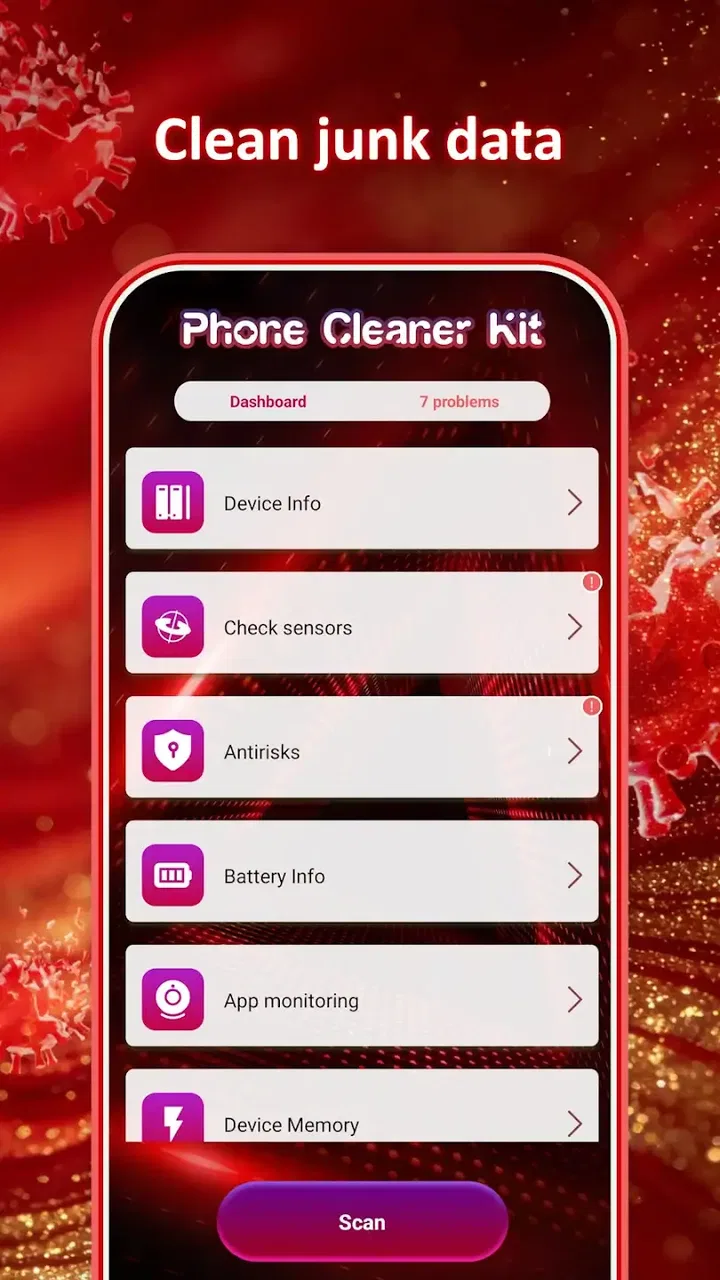
Phone Cleaner Kit
- 4.3
- Rating
- 50.00K
- Installs
- Free
- Price

 Analysis by App-foxy
I approached Phone Cleaner Kit as the kind of small utility you open when your phone feels crowded and you want a simple place to begin. Its store description is just “Phone Cleaner,” and that modest positioning matters: this is not presented as a complete phone-management suite or a dramatic performance booster. It is a free tools app from Hongwenyue, aimed at people who want a more direct cleaning experience rather than a complicated dashboard.
My first impression is that the app is best understood as a starting point. A cleaner can be useful when storage is being consumed by forgotten downloads, old media, or temporary clutter, but it cannot replace sensible file management. The most important habit is to review what is selected before removing anything. That is especially true when a phone contains work documents, family photos, offline videos, or files saved for travel.
What to expect before you begin
The application is free and has an Everyone content rating, so it is positioned for a broad audience rather than a specialist technical user. It requires Android 10 or later, which makes the operating-system requirement relevant before installation. I would check that point first, particularly on an older phone, because a cleaner is not useful if the device cannot run it.
You May Also Like

 AccuWeather: Weather Radar
AccuWeather Review: A Quick, Clear Forecast for Everyday Decisions
For everyday plans, the best forecast is the one you can understand quickly. AccuWeather makes rain timing, radar, and local conditions easy to act on, with a few trade-offs.

 Hill Climb Racing
Why Hill Climb Racing Still Turns Crashes Into One More Run
A tiny car, a bumpy hill and one more upgrade: Hill Climb Racing keeps resurfacing because its simple chaos makes every near-miss feel personal.

 AliExpress - Shopping App
AliExpress Makes Global Shopping Feel Personal, but Shoppers Bear the Risk
AliExpress turns a global marketplace into a pocket-sized discovery engine. Its reach is useful, its shopping loop compelling, and its trade-offs easy to miss.

 Lords Mobile: Kingdom Wars
Lords Mobile Is a Kingdom-Building Routine, Not a Quick Match
A case-by-case verdict on the building, battles, device demands, and social commitments that make Lords Mobile rewarding for some players and exhausting for others.

 PDF Scanner app - TapScanner
TapScanner Makes Paperwork Easier to Capture, Check, and Share
TapScanner makes scanning with a phone feel less like a rescue operation and more like a dependable step in getting work done. Its capture tools are useful, though not flawless.

 Block Blast!
 Shows How Much a Puzzle Game Can Leave Out
A quiet grid game shows why puzzle players increasingly value instant clarity, repeatable skill and low-pressure play—and where the genre still needs to catch up.
More From Our News Desk
View All News


Hongwenyue’s app has reached over 50 thousand installs and holds a 4.3 average from roughly 70 ratings. Those figures suggest that it has attracted a modest but real user base, while also reminding me not to treat it as a universally proven replacement for the tools already built into every phone. The current release is version 1.0.1, so I would approach it as a focused utility whose value should be judged by how clearly it helps with a real storage problem.
The short summary, “Every byte released brings a happy heart,” gives the app a cheerful tone, but I would keep expectations practical. Freeing space can make everyday use less frustrating, especially when downloads fail or the camera refuses to save a new picture. It does not automatically make an older phone feel new, and it should not be used as a reason to delete files without checking them.
The safest expectation is a guided cleanup, not a magic speed button. That distinction helps avoid one of the most common mistakes with cleaner apps: assuming that every suggested item is useless. Some files may be temporary, while others may be items you intentionally kept. I would use the app to locate candidates for removal, then make the final decision myself.
Who will get the most from it
I can see Phone Cleaner Kit working well for a first-time user who wants a less intimidating route into storage maintenance. It may also suit someone who regularly downloads images and documents but rarely revisits those folders. A phone used for messaging, browsing, photographs, and occasional downloads can accumulate small leftovers that are easy to overlook when checking folders manually.
The app is less suitable for a person who expects detailed control over every directory, advanced duplicate-file analysis, or a broad device-optimization toolkit. In that situation, the phone’s own storage manager or a full file manager may be a better choice. Those alternatives usually make the location and identity of files more explicit, which is valuable when precision matters more than convenience.
Getting through the first setup
After installing the app, I would begin slowly rather than tapping through every prompt. Read each screen and consider what the app is asking you to review. A cleaning tool needs access to the areas it is meant to inspect, but the sensible approach is to understand each request before continuing. If a prompt is unclear, pause and check the wording instead of granting access automatically.
The first useful preparation is to decide what “clean” means for your phone. If the immediate problem is a full storage drive, the priority may be large, disposable downloads. If the phone is mainly cluttered with old screenshots, the priority is visual review. If you are preparing for a trip, you may want to preserve offline maps and entertainment while removing unrelated files. A clear goal makes the results easier to judge.
I would also avoid beginning immediately before an important event. Give yourself time to inspect suggested items, especially if the phone contains irreplaceable pictures or documents. A short review before deletion is a small inconvenience compared with trying to recover something later. The app can help organize the decision, but it cannot know the personal value of every file.
One practical tip is to start with a single category or a small batch rather than attempting a total cleanup. This creates a clear before-and-after result and makes it easier to notice whether the freed space actually solves the problem. It also reduces the chance of selecting something important simply because it appeared alongside genuinely disposable material.
Making the first successful cleanup
For a reassuring first result, I would choose an obvious target: files I downloaded for a one-time purpose and no longer need. That might be an old attachment, a duplicate export, or a document that has already been copied somewhere safe. The key is not the size of the deletion; it is choosing something whose status is certain.
Once the app presents items for review, I would inspect filenames, locations, and previews whenever they are available. Similar-looking files deserve extra attention. A screenshot may look unimportant but contain a receipt, a confirmation code, or a reference you still need. The same applies to images received through messaging apps: their appearance alone does not tell you whether they are disposable.
After selecting only the items I recognize, I would perform the cleanup and then check whether the original problem has improved. If the phone was warning about low storage, try the action that previously failed, such as saving a picture or downloading a needed file. That is a more meaningful test than relying on a celebratory message. The result should be judged by what the phone can now do.
A useful workflow is to clean before a known storage-heavy task rather than waiting for an emergency. For example, before recording a long family event, I would review old downloads and exported videos while there is still time to reconsider each choice. This turns the app into a preparation tool instead of a last-minute rescue attempt.
Another non-obvious habit is to keep a small “review later” mindset. If I am unsure about a file, I would leave it alone and return after checking the related app or conversation. Speed is not the main measure of a good cleanup. Confidence is. A smaller deletion that I understand is better than a larger deletion that creates uncertainty.
Where first-time users may hesitate
The word “cleaner” can create confusion because different apps use it to mean different things. Some focus on storage, some emphasize memory, and some bundle notifications, battery tools, or security checks into one interface. I would read Phone Cleaner Kit as a storage-oriented utility based on its short description, not assume that it performs every kind of phone maintenance.
That also explains why I would not expect a dramatic speed increase after removing files. If the phone is slow because of an aging battery, an overloaded app, a system update, or a demanding game, deleting clutter may not change the underlying cause. The app is more convincing when the problem is lack of space than when the complaint is general sluggishness.
Another point of friction is the difference between an app’s suggestion and a user’s intention. A file can be old without being unwanted. A large file can be valuable. A duplicate can be a deliberate backup. I would treat every result as a recommendation to investigate, not an instruction to erase. That mindset is particularly important for people who share a device or use it for work.
It is also worth remembering that deleting a visible file may not remove every copy of the same content. Photos can exist in cloud services, messaging conversations, backup folders, or editing exports. Before removing something important, I would confirm where the trusted copy lives. This is one area where a dedicated file manager can be preferable because it may offer more context about paths and storage locations.
How it compares with built-in tools
Android’s built-in storage controls are often the first alternative, and they have a clear advantage: they are already part of the operating system and are closely connected to the device’s own storage view. If I only need to check which apps are large or remove a familiar download, the system settings may be enough and may offer a more direct explanation of what is consuming space.
A file manager is another strong alternative. It is better when I want to browse folders manually, rename files, move them to another location, or verify exactly what I am deleting. That extra control comes with more responsibility, though. A new user may find folder structures less friendly than a focused cleaner interface.
Phone Cleaner Kit makes more sense when I want a simple first pass and do not want to navigate through several system screens. Its trade-off is that simplicity can mean less detail. I would choose it for a quick review of obvious clutter, then switch to the built-in tools or a file manager when the decision requires deeper inspection.
I would skip it in favor of a more specialized solution if my main concern were duplicate photographs, cloud backup organization, application permissions, battery health, or detailed file transfers. Those are different jobs. Using one cleaner for every phone problem usually leads to disappointment because storage cleanup and device diagnosis are not the same task.
A realistic everyday example
Imagine that I am leaving for a weekend away and the camera suddenly reports that there is not enough room for new videos. I would open the cleaner, look for familiar downloads and old exported clips, and remove only items that I have already checked. I would not touch travel documents, offline maps, or the photos I plan to edit during the trip. Afterward, I would test the camera with a short recording and confirm that the phone can save it.
If that first pass is not enough, I would not immediately delete personal media. I would move to the phone’s storage settings and identify the largest apps or folders, then decide whether an unused download or an app cache is the real source of the problem. This two-step process is safer than repeatedly pressing a general clean button without understanding the result.
That example captures the app’s likely best role for me: it shortens the path from “my phone is full” to “I have a few sensible items to review.” It does not remove the need for judgment, but it can make the first decision less overwhelming.
What to do after the first cleanup
Once I have completed a successful cleanup, I would avoid treating the app as a reason to delete more. Instead, I would use the result to identify the habit that caused the clutter. If downloads were the issue, review that folder occasionally. If exported videos were responsible, remove old working copies after confirming the finished version is safe.
I would also keep personal backups separate from cleaning decisions. Important photographs and documents should have a dependable copy before I consider deleting local versions. A cleaner can help reveal what is present on the phone, but it should not become the only protection for memories or records.
For a first-time user, the best next step is a small repeatable routine: review obvious clutter, inspect anything uncertain, clean only what is understood, and test the phone afterward. That routine is more valuable than a large one-off deletion because it builds confidence without encouraging careless removal.
In my view, Phone Cleaner Kit is worth considering when you want a free, approachable tools app for beginning a storage cleanup on Android 10 or later. Hongwenyue keeps the idea easy to understand, and the Everyone rating makes it approachable for general users. Still, I would recommend it with one condition: use it as a review assistant, not as permission to erase blindly.
The app is a good fit for someone who needs a clear first action and prefers a focused utility over a complex management suite. It is not the right choice for users seeking deep file analysis, broad phone optimization, or complete control over every folder. If you keep that boundary in mind, the experience is reassuring: start with files you recognize, confirm the result, and move to the phone’s own tools when the situation demands more detail.
That balance is why I would recommend trying it for a specific storage problem rather than installing it with vague expectations. When the goal is concrete and the cleanup is deliberate, Phone Cleaner Kit can provide a practical first step without making the process feel technical or intimidating.
FAQs for Phone Cleaner Kit
01What is Phone Cleaner Kit, and how does it work?
Phone Cleaner Kit is an app designed to optimize your smartphone's performance by clearing junk files, cache, and unnecessary data. It scans your device for redundant files that can slow down your system and provides options to delete them, freeing up storage space and enhancing overall speed.
02Is Phone Cleaner Kit safe to use on my device?
Yes, Phone Cleaner Kit is designed to be safe and secure. It only accesses files necessary for cleaning and optimization, without compromising personal data. However, it's always a good practice to download the app from official stores like Google Play or the App Store to ensure authenticity and avoid malware.
03Does Phone Cleaner Kit affect my phone’s battery life?
Phone Cleaner Kit is designed to enhance your phone’s performance without negatively impacting battery life. In fact, by removing unnecessary background processes and junk files, it can help improve battery efficiency. However, using it excessively might consume some battery power during its operation.
04How often should I use Phone Cleaner Kit to maintain my phone’s performance?
It's generally recommended to use Phone Cleaner Kit once a week for optimal performance. This regular maintenance routine helps keep your device running smoothly by consistently removing clutter. However, the frequency can vary based on your usage patterns and storage needs.
05Are there any costs associated with using Phone Cleaner Kit?
Phone Cleaner Kit offers a free version with basic cleaning features. For advanced options and additional tools, there might be in-app purchases or a subscription model. Be sure to check the app’s pricing details in the app store to understand any potential costs before downloading.
Pros
- Boosts device performance efficiently.
- User-friendly interface with clear options.
- Quick scanning and cleaning process.
- Customizable cleaning settings.
- Supports multiple languages.
Cons
- Contains in-app advertisements.
- Some features require premium upgrade.
- Occasional false positive alerts.
- Doesn't support older Android versions.
- Limited customer support options.

Phone Cleaner Kit
Gallery